Textile lightbox profiles: 50, 70, 85, 105 mm and H profile
A printed fabric is fitted into an aluminium frame with a keder edge and lit from behind by LEDs. 5 profile options, single- and double-sided.
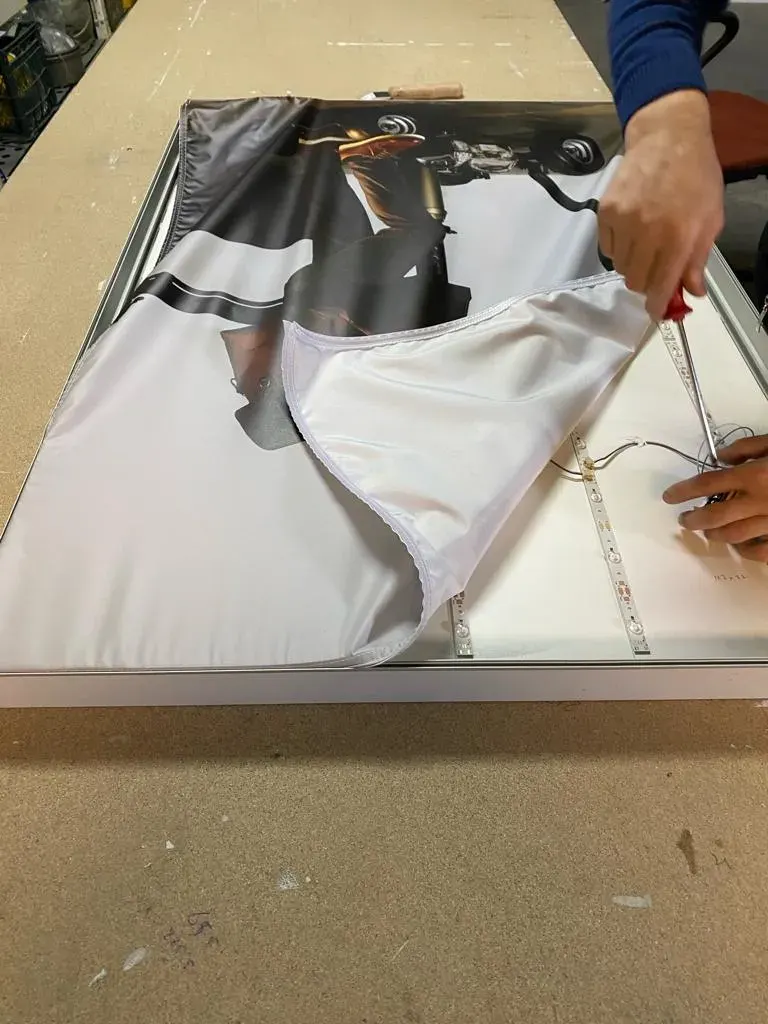
How a textile lightbox works
A textile lightbox is a lightbox in which a printed fabric is stretched into an aluminium frame. The keder edge on the fabric is pressed into the frame profile to hold the print in place, and LEDs inside the frame light it from behind.
Because the fabric can be pulled out and a new one fitted, changing the graphic is easy. We produce our profiles with or without LEDs, single- or double-sided, in grey, black and white.
5 profile options
- 50 mm
- Aluminium, painted grey or black, single-sided.
- 70 mm
- Aluminium, painted grey or black, single-sided.
- 85 mm
- Aluminium, single-sided.
- 105 mm
- Aluminium, single- and double-sided. In a double-sided box both faces carry a print.
- H profile
- Aluminium H-profile textile lightbox.
Components of a lightbox profile
- Frame profile
- Forms the edges of the lightbox and keeps the print under tension. The profiles meet at the corners and are fixed with screws or clips. A profile connector is used for every size.
- Lighting
- Houses the LEDs, designed to spread light evenly behind the print and prevent light leakage.
- Wiring and connections
- Elements that keep the electrical connections of the light sources safe and tidy.
- Keder edge
- Fixes the printed fabric to the aluminium frame.
Choosing a profile
The choice depends on the lightbox's size, purpose and design requirements. Single-sided profiles suit boxes seen only from the front; for boxes visible from both sides, the 105 mm double-sided profile is used. The right profile, correctly assembled, gives a solid and stable lightbox.
Send us sizes and quantities for your project.
Tell us the membrane type, colour and dimensions; we will prepare a quote with the technical details.
Related product page: Lightbox Systems